Creatine monohydrate has been studied more thoroughly than almost any other supplement on the market. Thousands of trials. Decades of safety data. And virtually all of that research has been focused on one thing: what it does to your muscles.
That framing has calcified into a cultural assumption. Creatine is a gym supplement. It is for people doing sets. It makes you strong and slightly heavier from water retention. End of story.
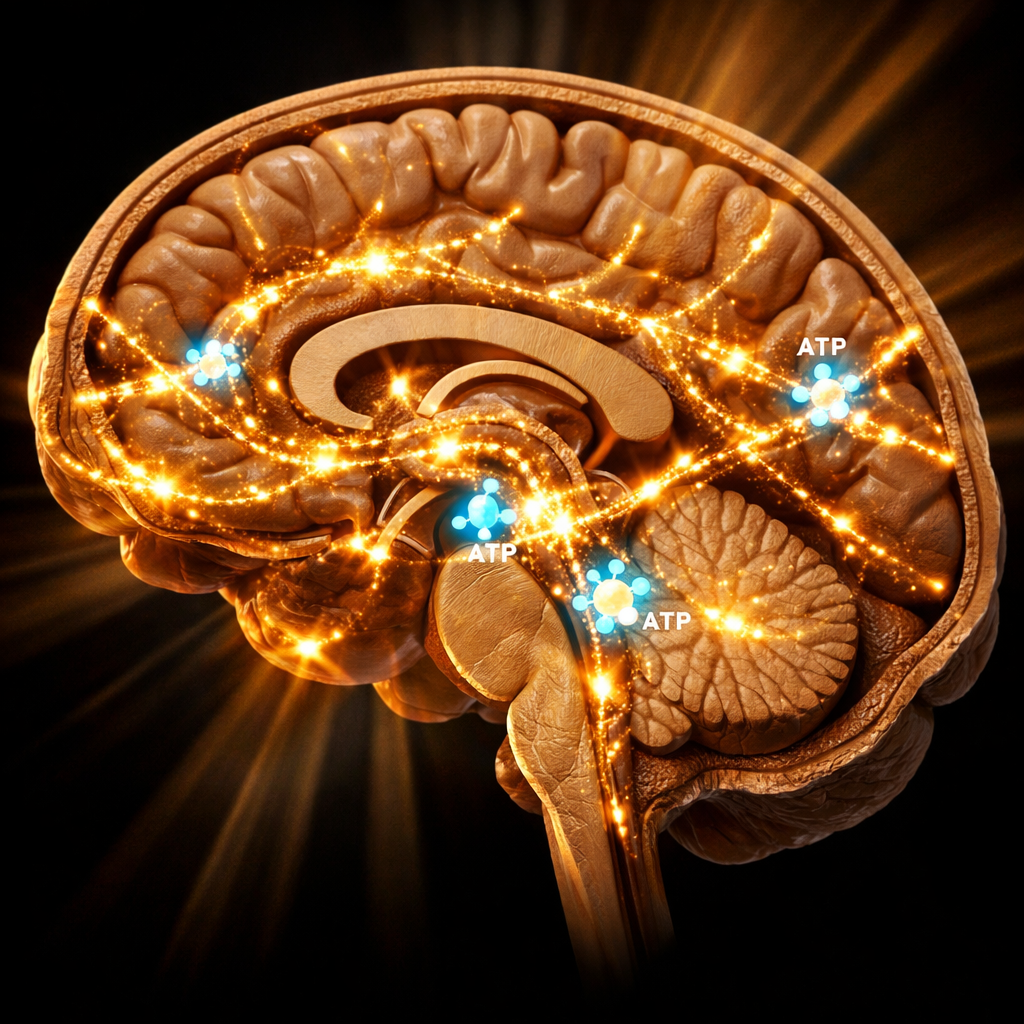
Except that is not the end of the story. Your brain runs on ATP. It accounts for roughly 2% of your body mass and consumes up to 20% of your energy at rest. It has the same phosphocreatine energy system that powers your muscle contractions. And researchers have been quietly building a body of evidence showing that creatine supplementation improves cognitive performance, protects against neurodegeneration, and is likely most effective in the people who eat the least of it.
The muscle industry has captured the creatine narrative. This article is about the other half of it.
How Creatine Works in the Brain
To understand why creatine affects cognition at all, you need a basic picture of the brain's energy economy.
Your neurons are expensive. Maintaining electrochemical gradients, firing action potentials, recycling neurotransmitters at synapses — all of this demands continuous ATP. The problem is that neurons have limited local ATP reserves and high, fluctuating energy demands. A burst of cognitive activity at a synapse can deplete local ATP faster than oxidative phosphorylation can resupply it.
This is exactly where the phosphocreatine system comes in. Inside neurons, creatine kinase catalyses a reversible reaction: phosphocreatine (PCr) donates its phosphate group to adenosine diphosphate (ADP), regenerating ATP almost instantaneously. This is a spatial and temporal buffer — it bridges the gap between sudden energy demand and the slower supply from mitochondria. According to a widely cited review of creatine kinase in the central nervous system published in Brain Research (ScienceDirect, 2008), this system is “vital for cells with high and fluctuating energy demands,” with creatine kinase isoenzymes strategically positioned at sites of ATP consumption throughout the brain.
There is also evidence that creatine may function as a neurotransmitter itself. It is found in synaptic vesicles and has documented effects on cortical neuron communication. Research highlighted by Frontiers in Nutrition (2025) notes that creatine “is present in synaptic vesicles and may impact cortical neuron communication, while also stimulating mitochondrial activity in hippocampal neurons.”
When you supplement with creatine, you increase the intracellular pool of free creatine available for phosphorylation. More phosphocreatine means more rapid ATP recycling capacity — a larger energy buffer for demanding cognitive tasks. The brain regions that show the most pronounced response to creatine supplementation tend to be those with initially depleted energy reserves, including the hippocampus, which is central to memory formation.
The 2024 Sleep Deprivation Study: Exceeding Waking Baseline
The most striking cognitive study on creatine in recent years was published in Scientific Reports in February 2024, coming out of Forschungszentrum Jülich in Germany (PMC10902318). The design was unusual because it combined MR spectroscopy — direct measurement of brain metabolites — with cognitive testing during active sleep deprivation.
Fifteen healthy adults were kept awake through the night in a crossover design. In one session, they received a high single dose of creatine monohydrate (0.35 g/kg body weight — roughly 25 g for a 70 kg person) before the sleep deprivation period began. In the other session, they received a placebo. Cognitive tests were performed at baseline (6 p.m.) and then at midnight, 2 a.m., and 4 a.m.
The findings are worth reading carefully. Sleep deprivation caused the expected metabolic deterioration: ATP dropped, pH fell, phosphocreatine declined. In the placebo condition, cognitive performance followed, degrading progressively through the night. In the creatine condition, these metabolic changes were attenuated. More importantly, processing speed — measured across language, logic, and numeric tasks — improved beyond the subjects' own waking baseline after creatine administration. Not just better than the sleep-deprived placebo group. Better than their own rested, pre-deprivation performance.
The researchers also found a significant reduction in subjective fatigue (8 ± 7%, p = 0.002) and improvements in short-term memory and reaction speed. The effect appeared within three hours of dosing, peaked at four hours, and persisted to at least nine hours.
As the study's lead coordinator Dr. Ali Gordjinejad stated to Medical Xpress: “The results suggest that a single but high dose of creatine enhances thinking capacity and causes changes in the brain's energy reserves during sleep deprivation.”
The mechanism is elegant: sleep deprivation creates a state of cellular energy stress in neurons. This increases the brain's uptake of creatine from the blood, something that is normally slow and limited. Under metabolic pressure, the system becomes more permeable. The creatine floods in, PCr is regenerated, and cognitive function is sustained.
The 2025 Alzheimer's Pilot: 11% More Brain Creatine
In May 2025, the first human trial investigating creatine supplementation in Alzheimer's disease patients was published in Alzheimer's & Dementia: Translational Research & Clinical Interventions (PubMed: 40395689). The study was known as CABA — Creatine to Augment Bioenergetics in Alzheimer's — and was conducted at the University of Kansas Medical Center.
Twenty patients with Alzheimer's disease, aged 60–90, took 20 g of creatine monohydrate daily for eight weeks. This is a higher dose than standard athletic supplementation, used specifically because creatine is preferentially taken up by muscle before it reaches the brain; the researchers needed to saturate peripheral tissue to get meaningful CNS levels.
The primary outcome was feasibility and safety. Nineteen of twenty participants achieved at least 80% compliance. There were no serious adverse events. But the secondary outcomes were the story.
Brain total creatine — measured by MR spectroscopy — increased by 11% from baseline (p < 0.001). Serum creatine was elevated at both four and eight weeks (p < 0.001). And on cognitive assessments using the NIH Toolbox Cognition Battery, there were statistically significant improvements in global composite score (p = 0.02), fluid cognition composite (p = 0.004), list sorting working memory (p = 0.001), oral reading recognition (p < 0.001), and the Flanker inhibitory control test (p = 0.05).
Matthew Taylor, Ph.D., who led the study, told the University of Kansas: “These preliminary results suggest that there are good things happening here, that creatine has a benefit. This is a great rationale for doing more clinical trials with larger sample sizes.”
This is a single-arm pilot without a control group — the researchers are appropriately cautious about causal claims. But the mechanistic logic is sound. Alzheimer's disease is characterised in part by impaired mitochondrial function and disrupted brain energy metabolism. Creatine supplementation addresses the energy deficit directly. The 11% increase in brain creatine is not a trivial number for a condition defined by progressive neuroenergetic failure.
The Meta-Analysis: Memory, Attention, and Processing Speed
Beyond these headline studies, a systematic review and meta-analysis published in Frontiers in Nutrition in July 2024 (PMC11275561) pooled results from randomised controlled trials on creatine monohydrate and cognitive function in adults. The analysis included 1,000 participants across 24 studies for the memory outcome alone.
The results:
- Memory improved significantly with creatine supplementation (SMD = 0.31, 95% CI: 0.18–0.44, p < 0.00001). The evidence quality was rated as moderate by GRADE assessment.
- Attention time improved significantly (SMD = −0.31, 95% CI: −0.58 to −0.03, p = 0.03).
- Information processing speed improved significantly (SMD = −0.51, 95% CI: −1.01 to −0.01).
Overall cognitive function showed a non-significant trend. The authors note this likely reflects heterogeneity across testing protocols rather than absence of effect. The effect sizes for memory are consistent with meaningful real-world benefit, particularly in tasks that demand sustained attention or rapid information retrieval.
The Vegetarian Advantage
Dietary creatine comes almost exclusively from animal flesh — beef, fish, pork, chicken. Vegetarians and vegans have substantially lower creatine intake from diet, which translates to lower levels in blood, plasma, and muscle tissue. The question is whether this lower peripheral creatine status translates to a larger cognitive response to supplementation.
The evidence is more nuanced than it first appears. Two MR spectroscopy studies found that brain creatine levels in vegetarians are not significantly lower than in omnivores, suggesting the brain maintains creatine content through endogenous synthesis regardless of dietary intake. This is a notable finding: the brain appears to prioritise its own creatine supply.
Yet cognitive studies consistently show that vegetarians respond more strongly to creatine supplementation than meat-eaters. Benton et al. randomised 70 female vegetarians and 51 omnivores to 20 g creatine/day or placebo for five days. Memory improved in the vegetarian creatine group but not in omnivores. A crossover study by Rae et al., reviewed in the International Journal of Environmental Research and Public Health (2020), supplemented 45 vegetarians with 5 g creatine/day for six weeks and found improvements in both working memory and intelligence scores versus placebo.
The reason for this differential response, despite similar baseline brain creatine levels, is not fully understood. One hypothesis is that while total brain creatine is similar, the dynamic flux through the phosphocreatine system — how quickly the brain cycles PCr during cognitive demand — differs in vegetarians due to lower circulating creatine available for rapid uptake during neural activity. Supplementation may improve this buffering capacity more effectively when the systemic pool is lower.
If you eat no animal products, the evidence is clear: creatine supplementation is likely to benefit your cognitive performance. If you do eat meat, the benefit is smaller but still present, particularly under conditions of stress, poor sleep, or high cognitive load.
Dosage: What Actually Works
The correct answer here is simple, and it is not what most gym content will tell you.
5 grams of creatine monohydrate per day, taken consistently.
There is no cognitive reason to do a loading phase. Loading — taking 20 g/day for five to seven days — is a muscle saturation strategy. The brain's creatine transporter (SLC6A8) is limited in capacity and operates against a concentration gradient. Flooding the system with 20 g/day does not substantially accelerate brain saturation beyond what five weeks of 5 g/day achieves. For chronic cognitive benefits, consistency over weeks matters more than the initial dose.
Loading is also not without discomfort for some people: the high acute doses can cause gastrointestinal distress, particularly if taken in a single bolus. 5 g/day, with food, avoids this entirely.
On form: take monohydrate. Creatine HCL, creatine ethyl ester, creatine nitrate — none of these have superior evidence in cognitive studies, and they are all meaningfully more expensive. Creatine monohydrate is the form used in virtually every peer-reviewed trial cited in this article. It is also the most bioavailable form for the money.
The Alzheimer's study used 20 g/day to compensate for peripheral muscle uptake competing with CNS delivery. For a healthy adult without neurodegenerative disease, 5 g/day appears adequate for chronic brain saturation, though some researchers argue 10 g/day may produce incrementally higher brain levels. The evidence for cognitive benefits is strongest and most consistent at 5 g/day.
What to Pair It With
Creatine is not a standalone optimisation. Two additions make the stack substantially more complete:
Magnesium (Threonate or Glycinate)
Magnesium is a cofactor for hundreds of enzymatic reactions including ATP synthesis itself. Magnesium-ATP complexes are the biologically active form of ATP in cellular processes — ATP without magnesium is largely non-functional. Beyond basic energy metabolism, magnesium modulates NMDA receptor activity (the same receptors involved in memory consolidation and synaptic plasticity) and supports GABA neurotransmission.
Magnesium L-threonate (trademarked as Magtein) was specifically developed for brain delivery and has shown increases in synaptic density and cognitive performance in animal models. Magnesium glycinate/bisglycinate is the better-tolerated general form and is widely available across the EU. Either is appropriate here. Magnesium oxide is not: its bioavailability is poor and it primarily functions as a laxative at higher doses.
European populations are broadly suboptimal in magnesium status. The combination of creatine (ATP recycling buffer) and magnesium (ATP synthesis cofactor) covers both ends of the cellular energy equation.
Hydration
Creatine pulls water into cells osmotically. This is well-established and is partly why creatine causes the modest body weight increase often reported in the first weeks of supplementation. For cognitive performance, intracellular hydration matters: even mild dehydration (1–2% of body weight) impairs working memory, attention, and processing speed in ways that directly overlap with the benefits creatine provides.
The practical minimum is 2.5–3 litres of water per day when supplementing with creatine. This is not about avoiding kidney stress — the kidney safety of creatine is well-documented in healthy individuals — it is about not undermining the cognitive benefits by being chronically under-hydrated.
The Cost Argument
This is where the case for creatine becomes almost absurd.
A one-kilogram bag of pharmaceutical-grade creatine monohydrate costs approximately €15–25 across EU markets. One kilogram contains 200 servings of 5 g. At €20/kg, that is €0.10 per day — and competitive brands bring this closer to €0.05.
The European nootropic supplement market is full of products marketed as “focus stacks,” “cognitive enhancers,” and “brain boosters” priced at €50–90 per month. Many contain citicoline, lion’s mane, bacopa monnieri, and various B vitamins — none of which has a comparable breadth of evidence to creatine for acute cognitive outcomes. Some contain proprietary blends with doses too low to be physiologically relevant.
Creatine at €0.05–0.10/day has a higher evidence density for cognitive benefit than almost any stack you can buy at 1,000x the price. This is not an argument against the others categorically — it is an argument for starting with the thing that works before spending more.
| Product | Monthly Cost (EU) | Cognitive Evidence | Safety Record |
|---|---|---|---|
| Creatine monohydrate (5 g/day) | €1.50–3 | Extensive. Multiple meta-analyses. | 30+ years. No serious adverse events in healthy adults. |
| Typical “nootropic stack” | €50–90 | Varies. Often individual ingredients at sub-therapeutic doses. | Varies by formulation. |
| Caffeine + L-theanine | €5–10 | Good. Consistent acute effects on focus and attention. | Good. Well-characterised. |
| Magnesium glycinate (200–400 mg/day) | €8–15 | Strong for sleep. Good for anxiety reduction. Moderate for general cognition. | Excellent. Well-tolerated. |
EU Availability and Forms
Creatine monohydrate is a food supplement across the European Union and is not subject to any regulatory restrictions in any EU member state, the UK, Switzerland, or Norway. It is classified as a food supplement under EU Directive 2002/46/EC and requires no prescription or special licensing to sell.
It is available in essentially every country in the EU through standard supplement retailers, pharmacies, and online stores. Cross-border shipping within the EU is unrestricted.
Forms available in the EU:
- Powder (monohydrate): The default and best-value form. Mixes easily in water, juice, or protein shakes. No meaningful taste if it is micronised.
- Capsules: Convenient but more expensive per gram. Useful for travel.
- Creatine HCL: Available but substantially pricier with no established cognitive advantage over monohydrate. Some manufacturers claim better solubility, which may marginally reduce GI discomfort at high doses.
- Creatine ethyl ester, Kre-Alkalyn: Niche forms. Not meaningfully superior in any published trial. Not recommended over monohydrate.
For EU buyers: look for products that are Informed Sport certified, Cologne List verified, or carry a similar third-party sports supplement certification. These audits test for banned substances and confirm label accuracy. Given that creatine is often used by competitive athletes, quality control matters — and the certification costs are reflected in products from brands like Creapure (Germany-manufactured), MyProtein, Bulk, and Optimum Nutrition.
Creapure is a specific trademarked creatine monohydrate produced in Germany by AlzChem Group AG. It is widely regarded as the reference standard for purity and is the ingredient used in many premium EU supplement brands. If label accuracy and contamination risk concern you, look for the Creapure logo.
What the Evidence Does and Doesn't Say
A few honest boundaries before the conclusion.
Creatine is not a pharmaceutical-grade nootropic with demonstrated effects on sustained real-world productivity in healthy, well-rested adults eating a normal mixed diet. The meta-analysis evidence is strongest for memory and processing speed, and the effects are more pronounced under conditions of stress, sleep deprivation, or lower dietary creatine intake (vegetarian/vegan). In a fully rested omnivore with no cognitive stressors, the benefit may be modest.
The Alzheimer's study is a pilot. Single-arm. No control group. It is a strong rationale for future research, not evidence of efficacy in a clinical sense. Research suggests the mechanism is sound; efficacy studies in neurodegenerative disease are still in early stages.
The vegetarian cognitive response data is compelling but involves older studies with small samples and, in the case of Benton et al., a high number of cognitive tests that increases false positive risk.
What the evidence clearly supports, without significant qualification, is this: creatine monohydrate at 5 g/day is safe, inexpensive, and associated with significant improvements in memory and processing speed across a robust body of randomised controlled trials. Under conditions of cognitive stress, sleep deprivation, or low dietary intake, the effect is larger. The risk-to-benefit profile is essentially unmatched in the supplement category.
The Summary
Creatine monohydrate is the most studied supplement in sports history. The cognitive data has been building quietly for years and is now substantial enough that it cannot reasonably be ignored.
The phosphocreatine system operates in your neurons with the same logic as in your muscles: it is a rapid-recycling ATP buffer that sustains performance when demand exceeds immediate supply. Supplementing with 5 g/day monohydrate increases this buffer. Under cognitive load, under sleep deprivation, in vegetarians and vegans, the performance benefit is measurable and consistent.
A 2024 study showed a single high dose could push processing speed beyond waking baseline during sleep deprivation. A 2025 pilot demonstrated 11% increases in brain creatine and measurable cognitive improvement in Alzheimer's patients. A 2024 meta-analysis confirmed significant effects on memory across 1,000 participants.
The cost is approximately €2 per month. The side effects in healthy adults are essentially non-existent. The form is monohydrate. The dose is 5 grams daily, no loading required. Pair it with magnesium glycinate or threonate and adequate hydration.
If you are building a cognitive stack in 2026, creatine is not optional. It is the foundation.
Sources
- Roschel H et al. (2021). “Creatine Supplementation and Brain Health.” Nutrients. PMC8912287. https://pmc.ncbi.nlm.nih.gov/articles/PMC8912287/
- Sandkühler JF et al. (2023). “Single dose creatine improves cognitive performance and induces changes in cerebral high energy phosphates during sleep deprivation.” Scientific Reports. PMC10902318. https://pmc.ncbi.nlm.nih.gov/articles/PMC10902318/
- Taylor M et al. (2025). “Creatine monohydrate pilot in Alzheimer's: Feasibility, brain creatine, and cognition.” Alzheimer's & Dementia: Translational Research & Clinical Interventions. PubMed 40395689. https://pubmed.ncbi.nlm.nih.gov/40395689/
- Prokopidis K et al. (2024). “The effects of creatine supplementation on cognitive function in adults: a systematic review and meta-analysis.” Frontiers in Nutrition. PMC11275561. https://pmc.ncbi.nlm.nih.gov/articles/PMC11275561/
- Wallimann T et al. (2008). “Functions and effects of creatine in the central nervous system.” Brain Research Bulletin. doi:10.1016/j.brainresbull.2008.02.035
- Benton D, Donohoe R. (2011). “The influence of creatine supplementation on the cognitive functioning of vegetarians and omnivores.” British Journal of Nutrition. PubMed 21118604. https://pubmed.ncbi.nlm.nih.gov/21118604/
- Forbes SC et al. (2020). “Benefits of Creatine Supplementation for Vegetarians Compared to Omnivores.” International Journal of Environmental Research and Public Health. PMC7246861. https://pmc.ncbi.nlm.nih.gov/articles/PMC7246861/
- Lyoo IK et al. (2007). “Cerebral energetic effects of creatine supplementation in humans.” American Journal of Physiology — Regulatory, Integrative and Comparative Physiology. doi:10.1152/ajpregu.00717.2006
- Frontiers in Nutrition (2025). “Creatine supplementation and muscle-brain axis.” doi:10.3389/fnut.2025.1579204
- University of Kansas Medical Center (2025). “Creatine shows potential to boost cognition in Alzheimer's patients.” https://www.kumc.edu/about/news/news-archive/creatine-alzheimers-research.html